A NUMBER

A NUMBER, Lil Tacker Productions at the Old Fitz, to 15 November 2026. Photography by Robert Miniter
In the 2100 slot at the Old Fitz – the Second Sitting – you can expect something that’s definitely short, as in 45 or 50 minutes thereabouts, and probably arcane, or cryptic, or otherwise. A Number, Caryl Churchill’s one-act quirkfest from 2002, is a mix of all three and an engaging think piece of unexpected twists and turns.
First of all, its premise – that a man, a widower, could clone offspring three decades ago, to alleviate the grief after the loss of his wife and young child – was at the time both futuristic and of the moment. Dolly the Sheep had been cloned in 1996 but rapidly showed why cloning adult cells was a bad idea. She was born a lamb but was already a cellular adult, and died of “old age” in 2003.
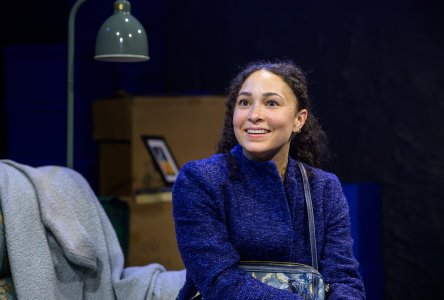
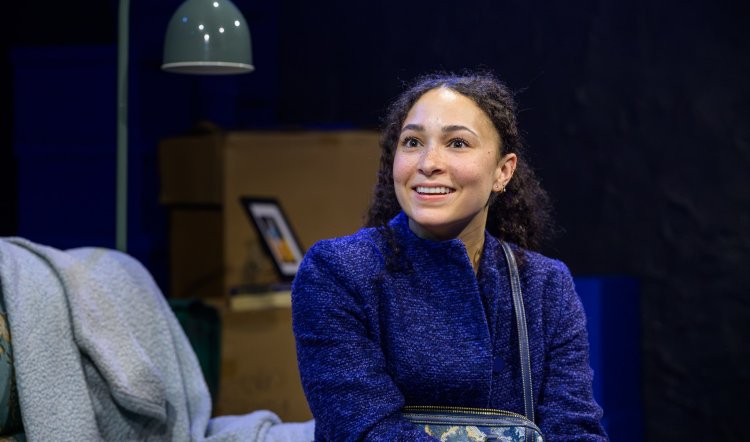
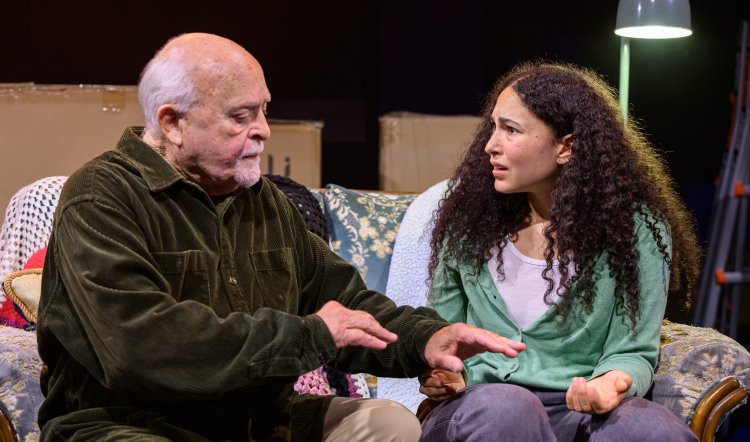
In A Number, Churchill was smart enough to have Salter (Danny Adcock) clone cells from his infant daughter so a reasonable lifespan could be expected. Just as long as she didn’t meet a fate similar to that which befell her mother and sister, that is. But as his now adult daughter discovers, she’s not the only one. And she – B2 (Jolie James) – is not happy about that, and quite a few other grievances. James also plays her siblings: Michelle, the original, and B1, another of perhaps twenty, but who knows. Having recently discovered the brood, Salter is all for suing the medicos.
The play has had many productions, in the UK and elsewhere, since its first and is popular. At this juncture, however, it seems anachronistic and not just because there’s now IVF rather than cloning, and drones and AI instead of September 11 (which still overshadowed the Western world when A Number first appeared).
Churchill, a fabled feminist playwright, wrote for, and it has so far been staged as, a father-son combination. Previous sons include Daniel Craig opposite Michael Gambon (no relation) in the original Royal Court production; Samuel West, who played opposite his father Timothy West at the Sheffield Crucible; and a Black version at the Old Vic with Lennie James and Paapa Essiedu, which picked up an Olivier for Best Revival in 2022.
Can’t help wondering why, and therefore, what’s missing. It isn’t the casting of debutant Jolie James as the three clones – B1, B2 and Michelle – because she’s splendid as she smoothly differentiates between the “sisters” in character and demeanour. That she and Danny Adcock are real-life father and daughter continues the play’s gimmick, but it’s immaterial as she is her own distinct talent. And Salter does Daddy with many hearty pats of various daughterly knees – such is the paralysis of emotion in the modern father.
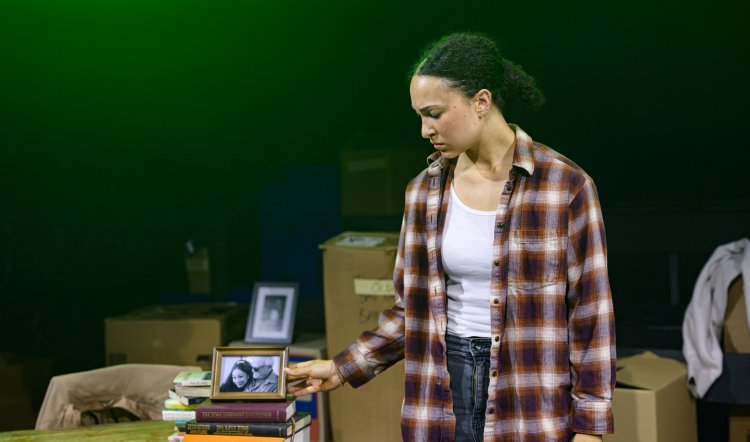
Hard to get past the sense that the gender switch of the clones is a bit 2026 and therefore already an outmoded novelty. It doesn’t bring anything to the drama in this production directed by Julia Pierrette. And it does not reveal why the play should have been so lauded in previous outings. In the New York Times (2004), Ben Brantley described Churchill as “ferociously inventive” (true) and went on to describe the play as “a gripping dramatic consideration of what happens to autonomous identity in a world where people can be cloned.” Perhaps he didn’t know about poor old Dolly.
In this instance, thanks to Jolie’s dynamism and intelligence, the focus revolves around B1, B2, and Michelle, as each is either angry, murderous, or indifferent to their collective circumstances. Thoughts might arise later about who we think we are if we are also someone else? Or, what is an individual, and does it matter anyway? Meanwhile, there are many puzzles to be pondered..