ES & FLO

ES & FLO, Mi Todo Productions at the Old Fitz, 13-28 February 2026. Photography: Robert Catto
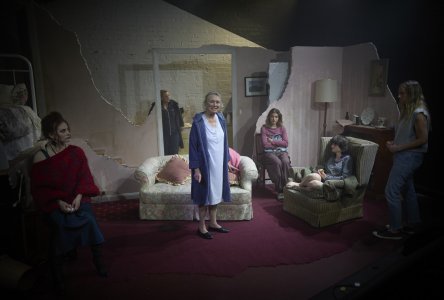
As Jennifer Lunn’s debut play opens, news footage of life at Greenham Common is fragmented across the domestic setting of Esme (Es) and Flo’s kitchen, diner, and living room (designer: Soham Apte, lighting: Luna Ng). The legendary women’s peace camp and anti-nuclear demo site at an RAF base in the south of England is where the two women met. As did thousands of others over the years of campaigning against US nuclear missiles in Britain.
And, like so many women who marched, camped, sang, danced, and were arrested, Greenham Common changed their lives. Gradually, in subtle drops of information, we learn that Es left an abusive marriage when she and Es fell in love, and the two have been together ever since. Forty years of loving partnership, but lived in the closet because, first, Flo didn’t want to upset her son. Then, as a school teacher, she rightly feared Margaret Thatcher’s anti-gay law, Section 28, which would have cancelled her career lest she infect kids with queerness.
Now they face another enemy. The insidious creep of dementia through an aging population is high on the agendas of governments and media. It’s usually couched in statistics: its effect on health and housing facilities, and the wider economy. Human costs are of lesser interest, unless there’s family that might benefit from a house sale.
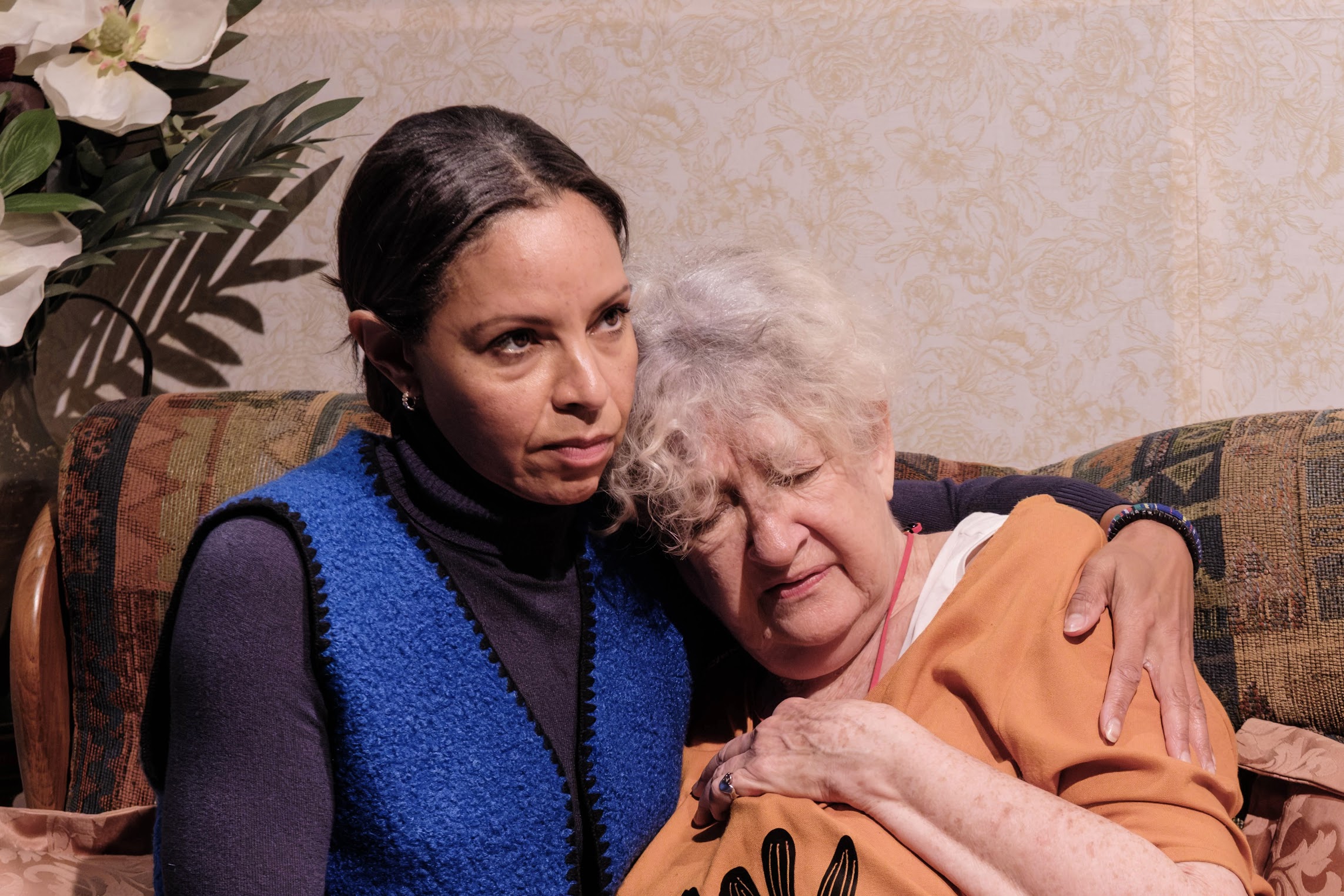
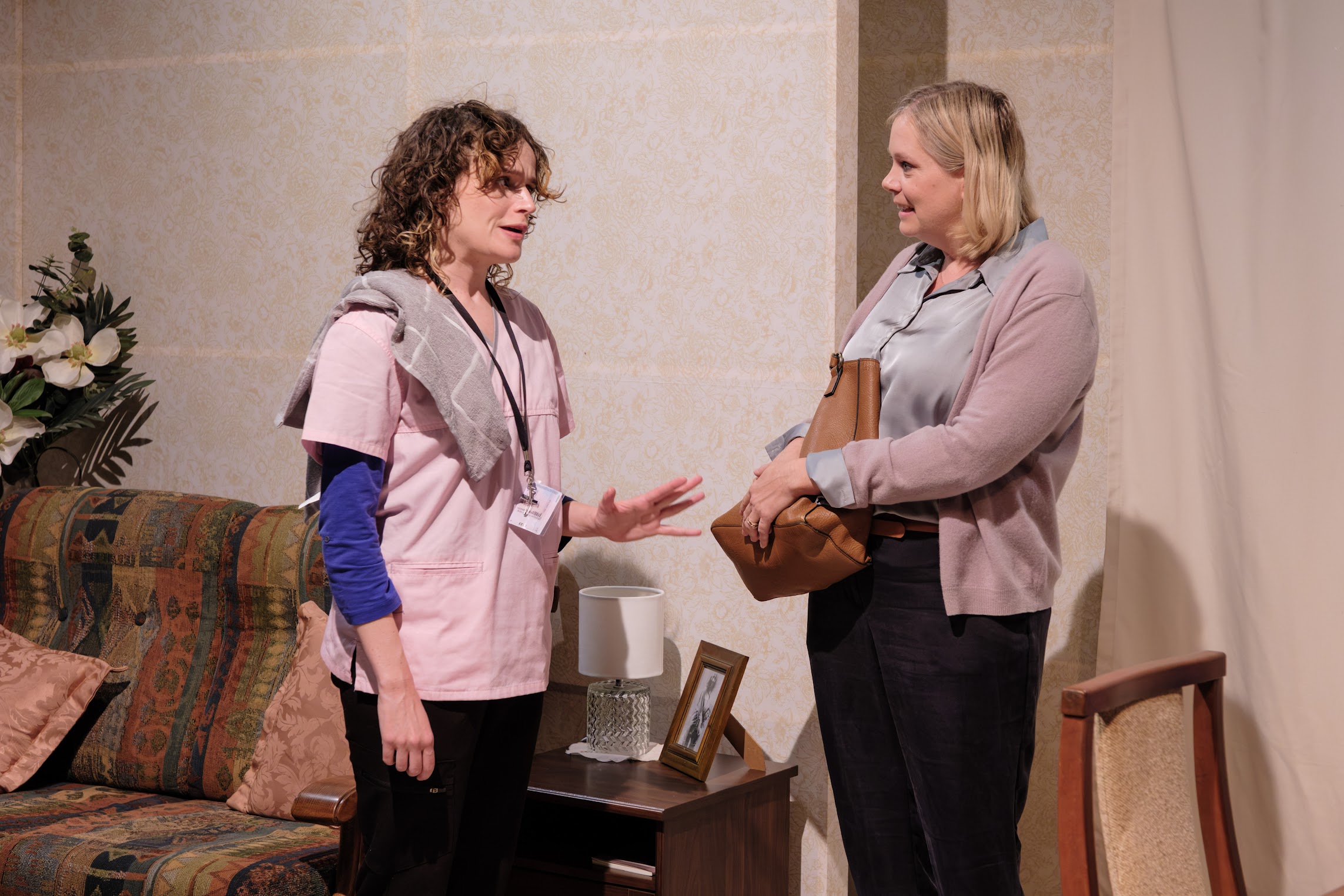
Es is retired, potters in the garden, and is aware that she’s becoming “forgetful”. In Annie Byron, the play is gifted with a central performance of exquisite tenderness and energy, as well as a playful daffiness that has disguised the slippage of her mind. She’s partnered, in every sense, by Es: Fay Du Chateau in a remarkable stage debut of understated strength and intelligence. As the legally unacknowledged partner, she stands to lose everything when the long-absent son, Peter, appears by proxy through his simpering, perfect wife, Catherine (Eloise Snape and a nuanced performance of blind earnestness).
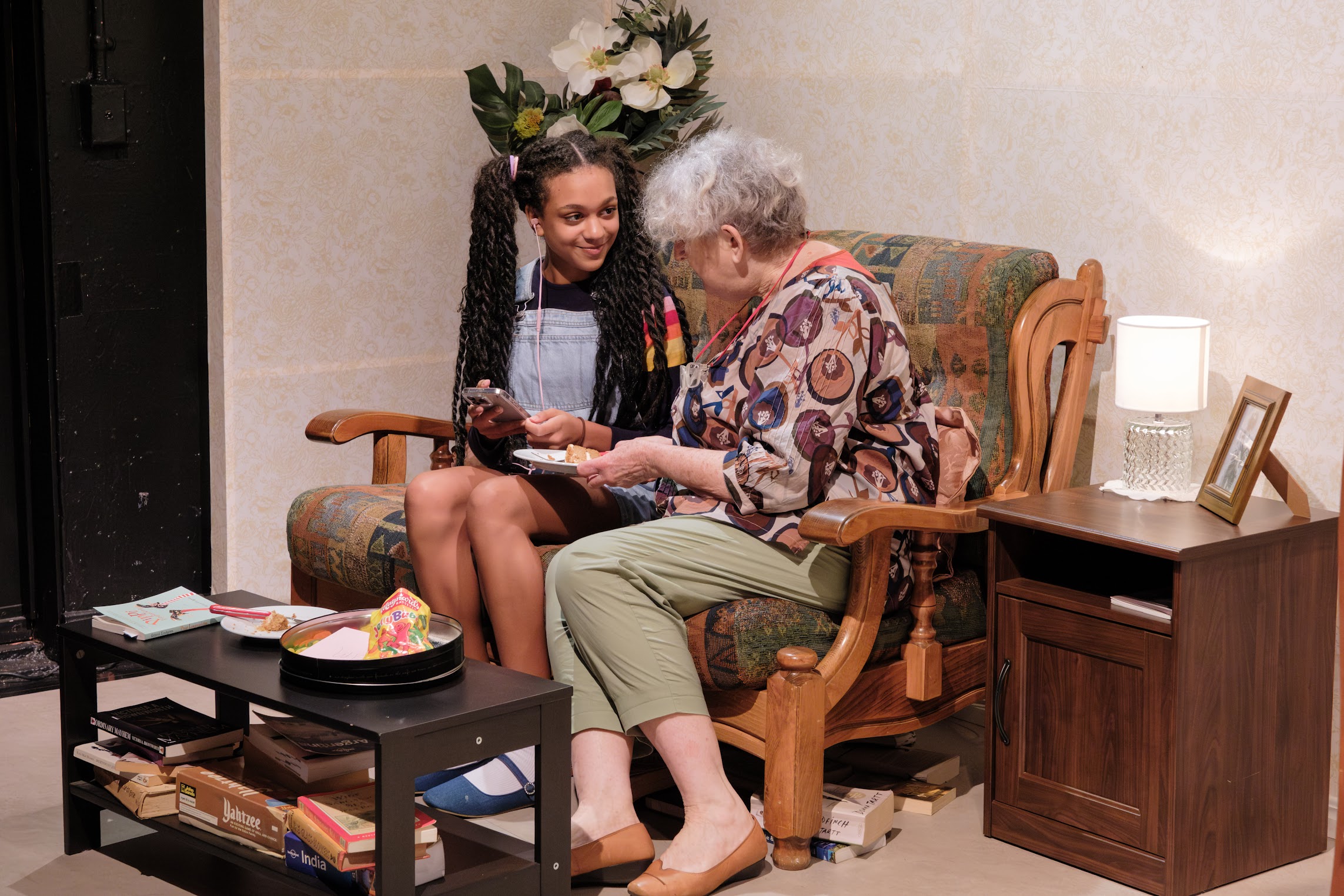
Peter’s patriarchal attitude is quaintly but dangerously antithetical to his mother’s bone-deep feminism and independence. Although he never appears, his presence looms darkly. His attitude to Es, and by extension to Flo, is encapsulated in Catherine’s deceptively demure, “I know it’s difficult. You’ve obviously been a good friend to her, but it’s time to let us take over now.” Parachuted into this inflammatory situation is house cleaner-carer and Polish immigrant Beata (Charlotte Salusinszky) and her tween mixed-race daughter Kasia (Erika Ndibe). Hired by Peter without consulting Es, they, too, are up against society’s prejudices. Beata’s work status puts her low on the social ladder despite her smarts, while her religious parents, back in Poland, know nothing of her long-ago one-night stand and its result.
Clad in the nondescript togs of their various stations in life (costumes: Alice Vance), and directed with a light, sure hand by Emma Canalese, the relationships between Es and Flo and the interlopers develop in unexpected ways. As the maturing child and disappearing adult, Kasia and Es blossom into a heartwarming generational story of their own. Meanwhile, Es’s outrage and terror push her into dark places, yet as Beata comes out of her own shell of cranky self-protection, she in turn draws Es back into the light.
These relationships grow and delight even as Es’s butterfly mind flits happily through patches of light and love; in and out of gloom and fright, and always back to her life’s haven: Es. Simultaneously, the gnarly yet saccharine presence of Catherine – peripheral but threatening – has her own surprises in store.
Es & Flo is a story that, because it begins at Greenham Common, tells us that battling, loving, enduring, and never giving up is the only way to live, and will also carry us through 90 powerfully enthralling minutes of laughter, tears, and enlightenment.
Jennifer Lunn’s play is a remarkable achievement in bringing to the fore a rarely portrayed love story while intertwining it with the scourge of modern old age, and the women’s personal politics with the wider political landscape of a Britain that never got over Thatcherism. Do see this – you won’t forget it.