HOW TO SUCCEED IN BUSINESS WITHOUT REALLY TRYING

HOW TO SUCCEED IN BUSINESS WITHOUT REALLY TRYING, LPD Productions with Hayes Theatre Co at Hayes Theatre, 28 August - 27 September 2026. Photography by John McRae.
The stage adaptation of Shepherd Mead’s tongue-in-cheek 1950s bestseller was by Abe Burrows, Jack Weinstock and Willie Gilbert, with music and lyrics by Frank Loesser. It won seven Tonys, the Pulitzer for Drama, and ran for more than 1400 performances. Storied productions have followed and been similarly successful. And this one?
It’s not for want of trying. As is customary with a Hayes production, the cast and musicians are top tier. Yet, at just under three hours, including interval, this 1961 post-Golden Age musical seems much longer. One would want to leave the theatre with enough business tips to outsmart Warren Buffett to make it worthwhile.
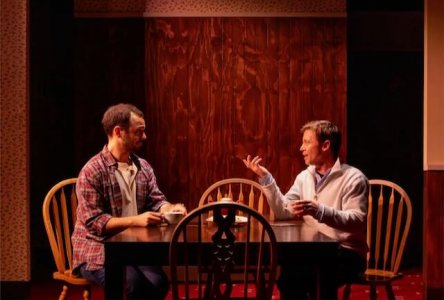
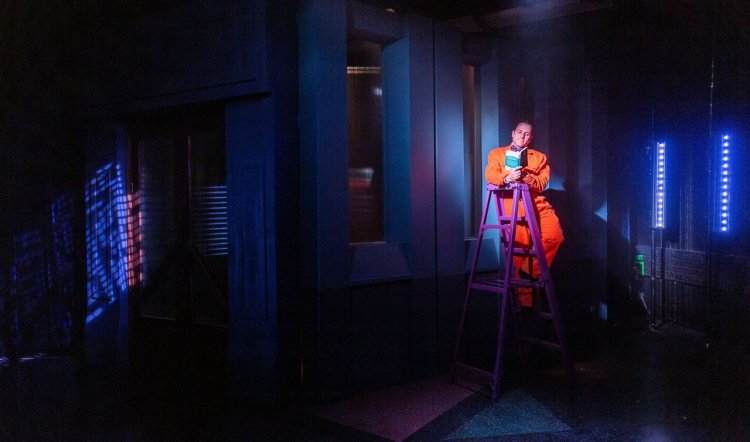
Jake Speer charmingly leads the company as J Pierrepont Finch, a young window-cleaner with ambitions beyond his ladder. His would-be nemesis is the awful Bud Frump (Max MacDonald), representing nepotism as the nephew of Simon Burke’s JB Biggley, oleaginous president of World Wide Wicket Company (don’t ask).
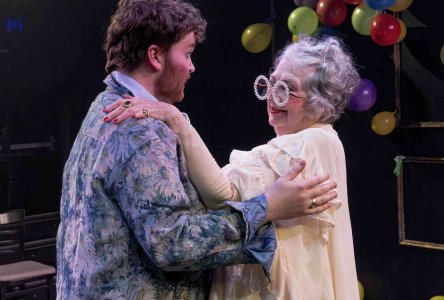
Song and dance veteran Wayne Scott Kermond is Wally Womper, chairman of the board and once a window-cleaner. Georgia Laga’aia is Rosemary Pilkington, a secretary with an exceptional voice whose ambition is marriage to “Ponty” and a home in the ’burbs. Lucy Lalor is Hedy LaRue, Biggley’s sexy secret and a cross between Melania and Stormy. Also prominent is Biggley’s formidable secretary Miss Jones (Noni McCallum), the de facto, if unacknowledged, boss of WWW.
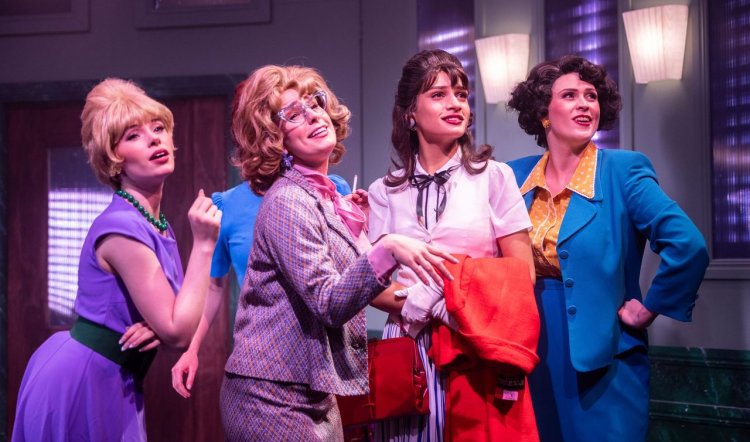
A terrific bunch of WWW employees: Kaeng Chan, Stacey Thomsett, Taye Grant, Madeline Pratt, Zachary Webster, Kye Hall, Katie Green and Kristina McNamara flawlessly perform the many intensely choreographed numbers – originally by Bob Fosse, here under the purview of the show’s director/choreographer Cameron Mitchell. He said, in a recent interview in the Financial Review, “Time has moved on, but 1961 hasn’t moved on. Time capsules are important. They remind us of the way things really were."
Okay, so, is it dated? Yes. Should that matter? Not necessarily. Think Oliver! (1960), Calamity Jane (1961), or even 1956’s My Fair Lady (opening yet again any minute for Opera Australia). They more than stand up to modern scrutiny without heavy renovation. But How To Succeed… does, I believe, need attention.
The satirical elements of the show – with handsy, ogling men, and reinforced glass ceiling separating women from the executive floor, and so on – are still recognisable. So why did the opening night drag so badly (despite the obligatory, if partial, standing O)?
Sadly, it wasn’t because the central premise is no longer true. Despite decades of “progress”, and some women in chairs once occupied only by a Biggley or a Womper, discrimination is alive and well. It’s the piece itself. The score is largely forgettable, and solo numbers for the leads are neither scintillating nor necessary as the characters they’re supposed to explain are already fully 3D.
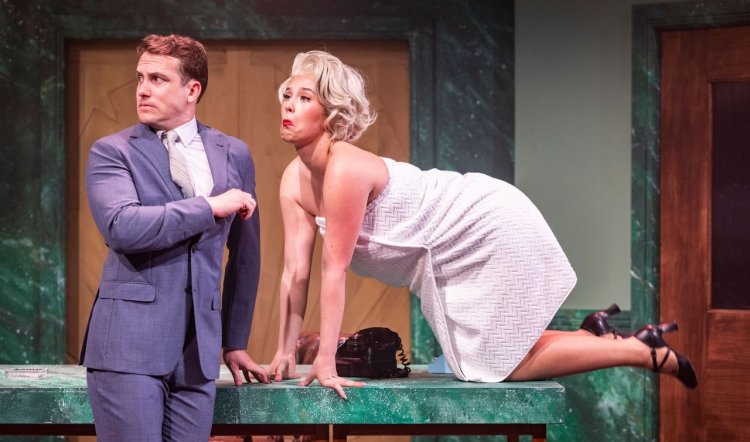
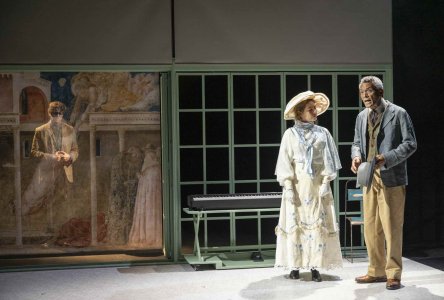
In the second half, when many short scenes involve long-winded furniture moving, the set (Dominic Foffani), which was clever in the first half, is revealed as cumbersome and time-consuming; although Peter Rubie’s lighting makes the most of every opportunity.
So, rather than invert genders or place the show in a clear perspex box, the simple excision of about 15 minutes of song would immensely improve things. Getting rid of “Paris Original”, where the leading women turn up to a function in (gasp) the same bespangled frock would save another five minutes, and not detract from costume designer Christine Mutton’s excellent post-50s business-wear.
In the end, you have to wonder what it was all about. Impeccable musical director Kim Gilbert leads the period-conscious backstage band, and if the sound can be modulated a tad, that would be good. But the writers clearly did their dash devising the character names, and it’s hard to reconcile Loesser’s work with the man who wrote such immortals as “Baby, It’s Cold Outside”, “A Bushel and a Peck”, “Luck Be A Lady Tonight” and “Sit Down You’re Rocking the Boat.” A disappointment.