A ROOM WITH A VIEW

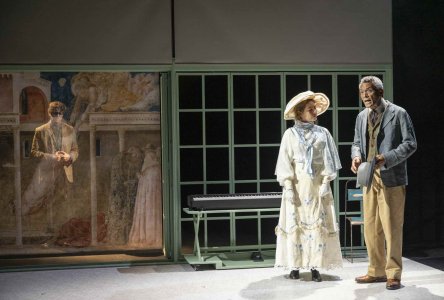
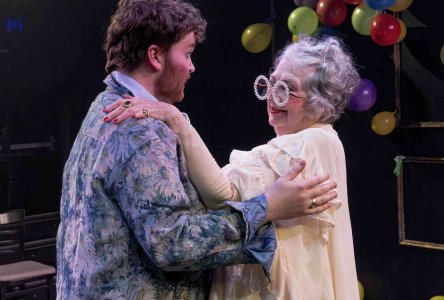
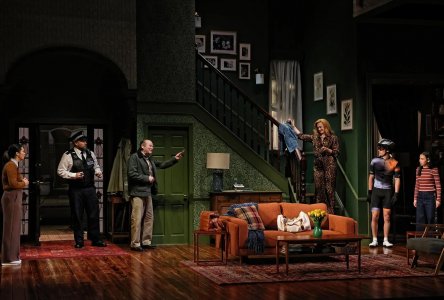
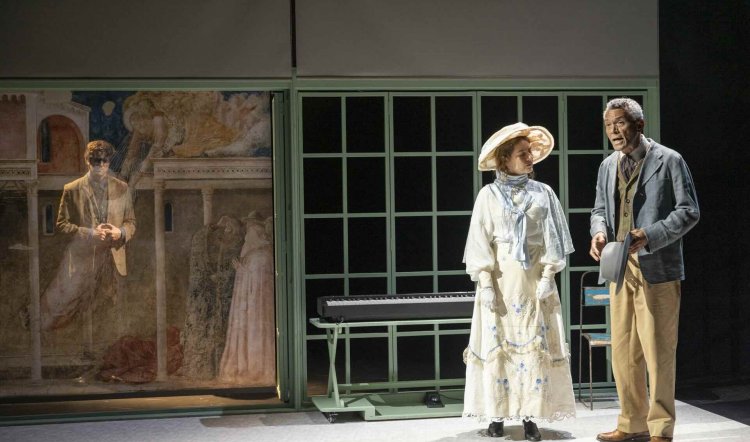
A ROOM WITH A VIEW, Upstairs Belvoir at Belvoir St Theatre, 3 October-1 November; a co-production with Melbourne Theatre Company (14 November-19 December 2026), Black Swan State Theatre Company, 5-14 March 2027. Photography by Brett Boardman
E.M. Forster’s Edwardian novel A Room With A View was set at a time when the pursed lips and prudery of Victorian England still held sway – despite Edward VII’s ascension to the throne at 59 following a princely career of some 50 mistresses, a wife and six children. Forster was homosexual, as his novels reveal, but unlike the monarch, it was not something he could live or get away with.
In the play it’s young Lucy Honeychurch (Nathalie Morris) who gets to do the sexual exploration and flouting of taboos, while in this adaptation, by Grace Chapple, it’s Lucy’s brother Freddy (Tomas Kantor) who yearns illegally for the Reverend Mr Beebe (Tom Conroy). And it’s the Reverend who says, apropos something else entirely, “It can be so difficult to understand people who speak the truth.”
Not that Lucy’s desire for truth and beauty, and flouting, is easy. On this European adventure – destination Florence with a promised room overlooking the river Arno – her mother has sent with her starchy cousin and chaperone Charlotte (Hayley McElhinney), whose crossness is boundless when they discover their rooms are at the back of the hotel and the Arno is not. Lucy is too excited by Florence to care, but Charlotte’s ire is the catalyst for what follows.
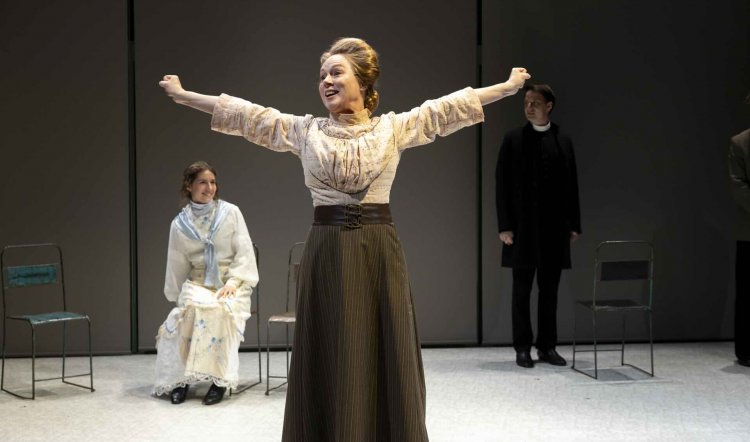
Her complaints are overheard by Mr Emerson (Patrick Williams) and his son George (Luke Wiltshire) and the gentlemen immediately offer their own view-blessed rooms. Lucy is thrilled; Charlotte is outraged. They are men, after all, and strangers to boot. Lucy prevails, and the Arno is revealed as an unaccountably small depiction of the river when grey-white blinds are pulled up a grey-white wall. (An odd set design by Zoë Atkinson, incorporating some chairs on an otherwise empty stage, but enhanced somewhat by Amelia Lever-Davidson’s thoughtful lighting.)
The mix of class consciousness, ennui and excitement, good manners and bad behaviour so familiar to audiences after decades of English period drama is all there to be enjoyed – or endured – over two hours and 40 minutes, including an interval. Nevertheless, back in the Home Counties after the awakenings of the Continent, Lucy faces a dilemma: the memory of kisses with George Emerson is now much more appealing than her mother’s insistence on a suitable marriage. As pushy matriarch Mrs Honeychurch, Kate Atkinson is horribly credible, and she also doubles as the bustling butch, Miss Lavish.
For Lucy, however, the prospect of marriage to foppish Cecil (Charles Wu) is now unbearable. It’s not helped by the decision to make Cecil a caricatured ninny in spats. Cheap laughs are plentiful but it doesn’t make a lot of sense. Not that it mattered to those sections of the audience that clapped like mad when the lights first went down, and whooped for most anything else. The general ricketiness of the concept, directed with liveliness by Hannah Goodwin, seemed confirmed by empty seats post-interval.
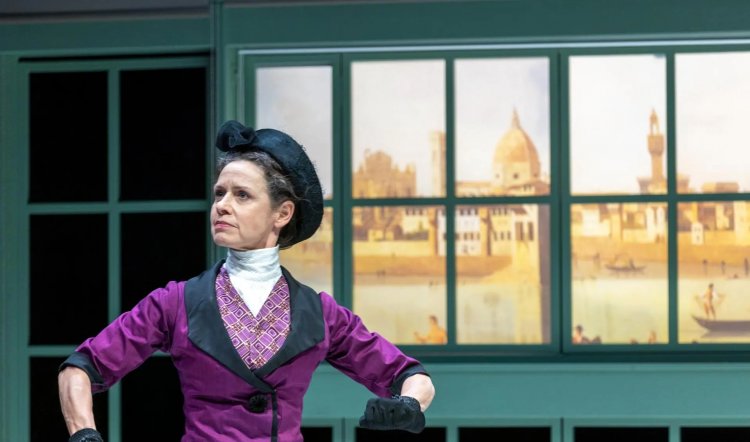
Hayley McElhinney and Messrs Kantor, Conroy and Wiltshire made the very best of what’s on offer, while, on opening night at least, Patrick Williams was flat as a tack. And, despite the high jinks, a noticeable drag was introduced into an otherwise sprightly evening by three self-indulgently long scenes of (a) skimming stones across the river, (b) a tennis match and – gasp – (c) the promised nudity (male) of a lads’ swim in a Surrey lake. The choreography of these, by Elle Evangelista, was witty but disrupted the flow through their length. A standing-O completed the evening.