ROMEO & JULIE


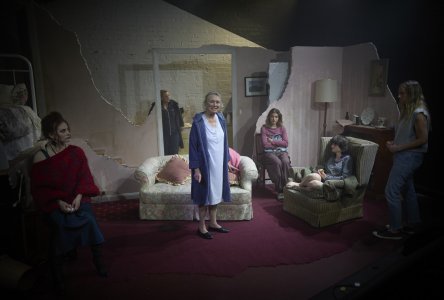
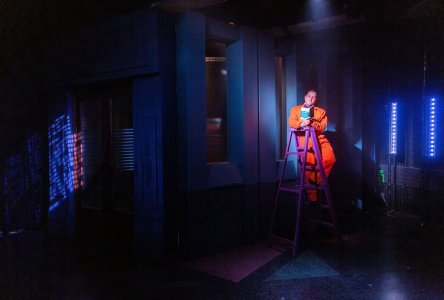
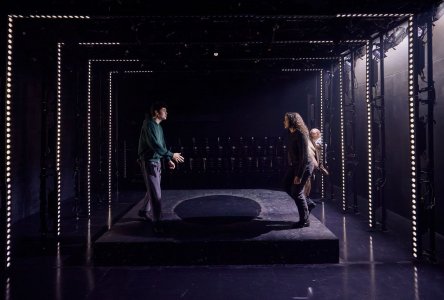
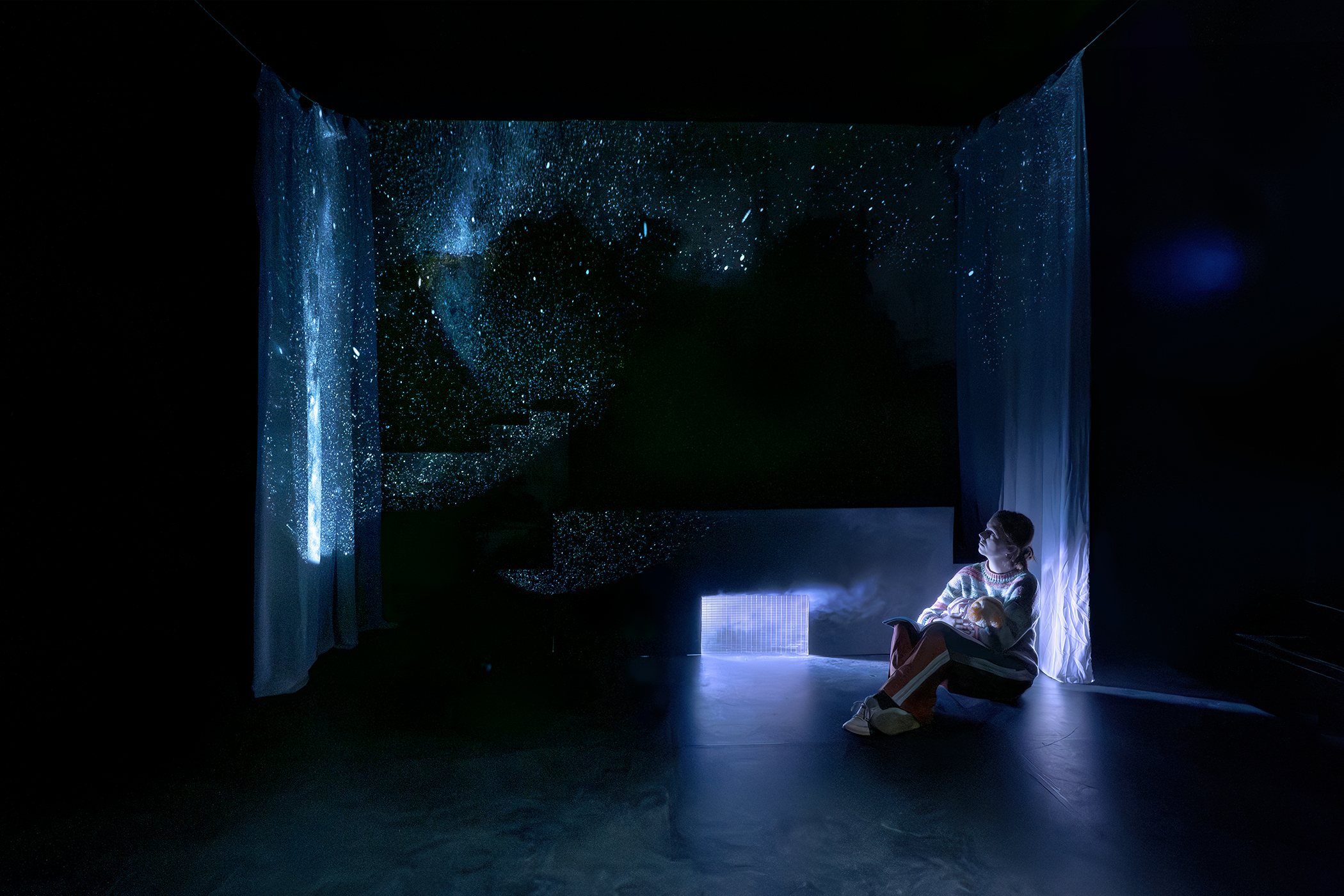
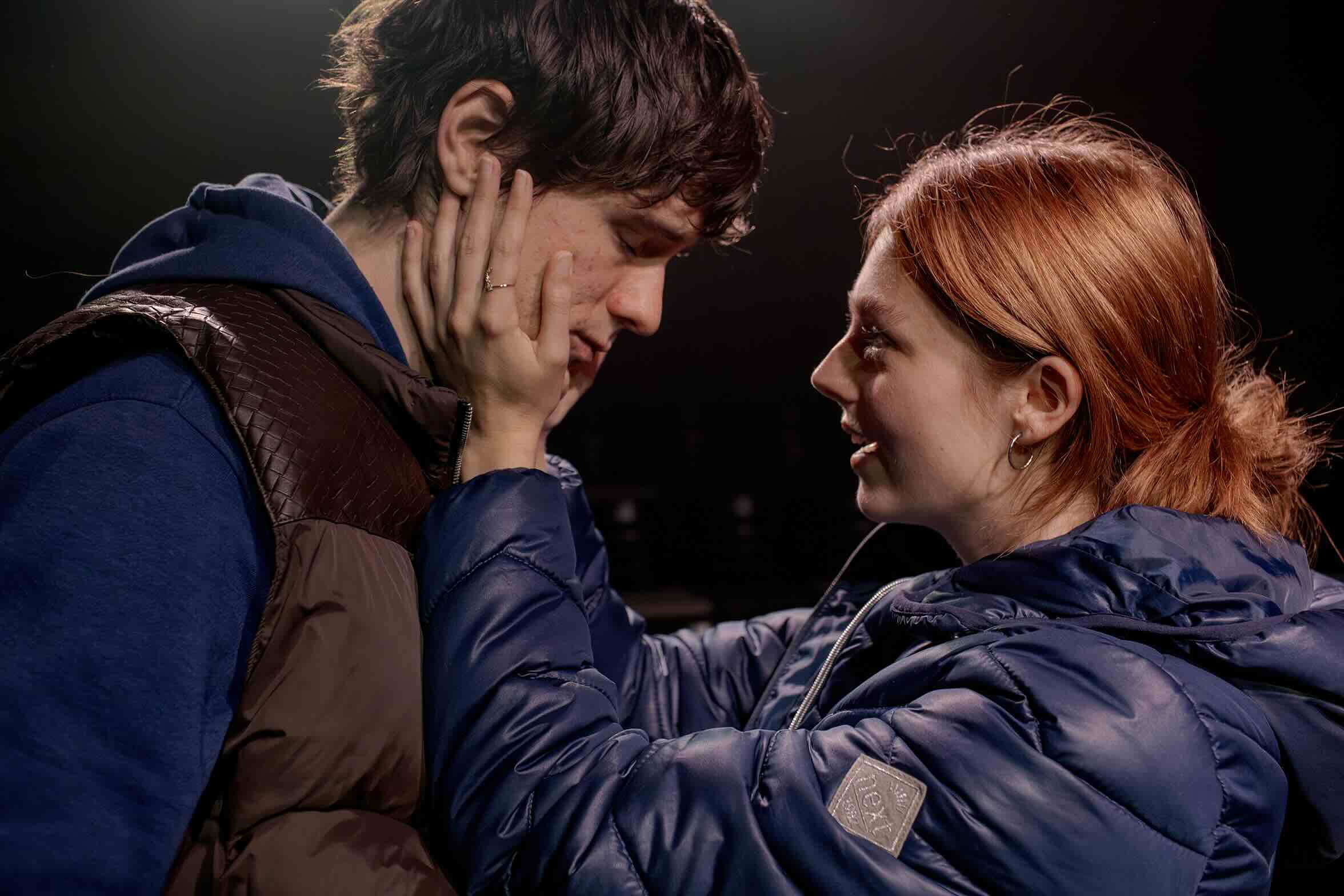
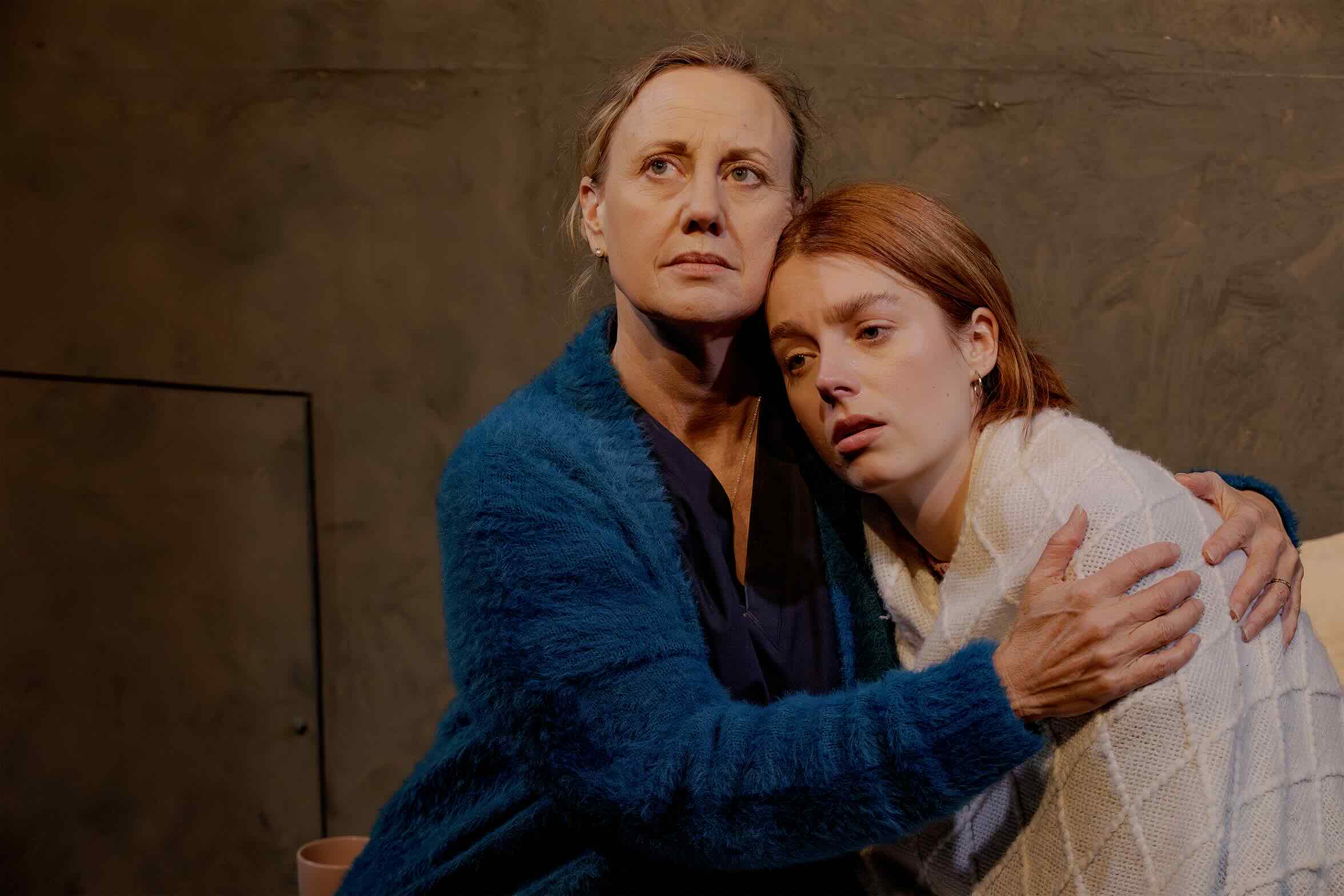
ROMEO & JULIE, Mad March Hare Theatre in association with Bakehouse at KXT on Broadway, 8-23 May 2026. Photography by Phil Erbacher: above - Estelle Davis and Milky Way; below - Davis and Alex Kirwan; below - Linda Nicholls-Gidley and Davis
Two households, both alike in struggle, in fair Splott where we lay our scene. Gary Owen's Romeo & Julie wears its Shakespearean inspiration lightly – so lightly that it’s barely there at all, and much the better for it. This isn't a tragedy of feuding families but something more quietly devastating: a story about whether love can survive when dreams and responsibilities pull in opposite directions, and stinky nappies, milky puke and poverty kill passion stone dead.
Owen isn't interested in the breathless romance of star-crossed lovers, however. Romy (Alex Kirwan) is eighteen, raising his baby daughter solo after her mother scarpered and his acerbically alcoholic mother Barb (Claudia Barrie) refuses to help. Julie (Estelle Davis) is Cambridge-bound, her head full of astrophysics. When they meet, their connection is immediate. Owen explores what happens when two teenagers try to build something real in a world that wants to grind them down.
The performances anchor everything. The production finds its heart in the central pairing, navigating Owen's naturalistic dialogue with genuine chemistry. Their early scenes crackle with the specific awkwardness and thrill of new love: the loaded silences, the tentative jokes. Director (also Claudia Barrie in a remarkable double act with booze) guides her young leads with a sure hand, and they reward her with performances that are lived-in and deep.
Julie’s parents are more problematic. Owen draws them as types rather than people, and without fine performances from Christopher Stollery as her dad, and Linda Nicholls-Gidley as her step-mum, the production might have been less than it is. Nevertheless, there is shocking honesty in his reaction: that Julie has made her choice, now she must get on with it, and his wife’s agonised support of her husband. A late scene between Julie and her stepmother is beautiful and moving.
Geita Goarin's set design is minimal urban brutal, leaving the traverse space uncluttered, and Topaz Marlay-Cole's lighting comes into its own when evoking the cosmic scale of Julie's ambitions. Josh Anderson’s sound design contributes present-day South Wales grit and realism by turns, as do Emily Brayshaw’s uncomplicated costumes.
Owen asks sharp questions. Why are loving young parents treated as a crisis? What do we lose when we sacrifice our ambitions for family? And what do we lose if we don't? Julie's weariness is palpable: “I'm too exhausted to be brilliant,” she sighs, and you feel the weight of every sleepless night and abandoned textbook.
But these aren't the reckless, passionate aristocratic teenagers of Shakespeare's Verona – Romy is preternaturally sensible, in ways that make him heartrending. Owen's breakthrough Iphigenia in Splott (seen recently at the Old Fitz) was unapologetically heartbreaking, while Romeo & Julie is more interested in the uncomfortable truths of contemporary working-class Wales.
And there's something valuable in Owen's insistence on hope. In a theatrical landscape crowded with misery porn, this is a love story that believes its characters deserve happiness and shows them fighting for it. The ending is muted, but earns its tentative optimism.
Romeo & Julie doesn't reinvent the wheel. It's a well-crafted piece of naturalistic writing given a fine, often intensely moving production. At its best – when two young people are figuring out what they mean to each other – it’s a reminder of why we keep telling love stories, and loving them.