THREE SISTERS

THREE SISTERS, Last Waltz Productions at the Old Fitz, 17 April - 9 May 2026. Photography by Robert Miniter
In 1900, the Moscow Art Theatre commissioned Anton Chekhov to write a play. At the time Russia was rumbling like a volcano on the verge of erupting as the peasantry and working class collectively decided that enough extreme poverty was enough.
The peasantry and working class don’t go to the theatre, however, so in 1901, Three Sisters depicted the discontent of the upper middle class as female boredom and futility, while the men were a tangle of pomposity and inadequacy. Did the audience see themselves in the mirror? Unknown, but on its first outing, the reception was mixed: was it funny or was it poignant and full of pathos? Both, as it turned out.
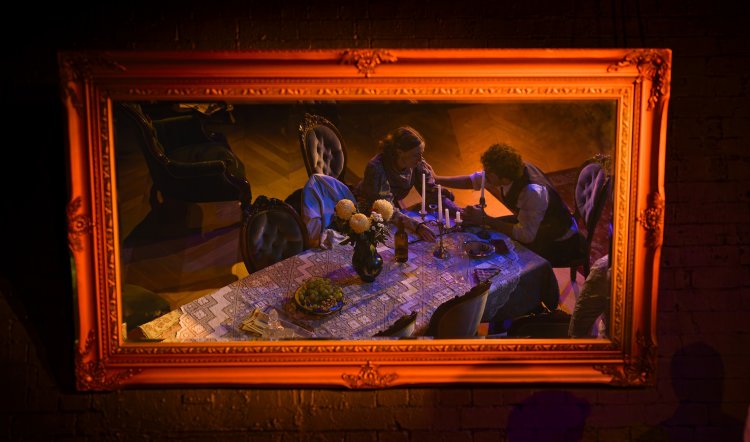
Intriguing, then, that this production’s design, by Ella Wilkinson, is dominated by a large and ornately framed mirror on the wall above an elaborately set dining table. The mirror is the key element in a clever realisation of home for Olga (Teodora Matoviċ), Masha (Madeline Li), and Irina (Tessa Olsson) Prozorova. The sisters, along with brother Andrey (Matthew Alexander), various hangers-on and visitors, live in a provincial town, far from Moscow – for which they all, in their different ways, yearn.
Excitement is measured in the presence or absence of the military and its handsomely caparisoned officers, as well as the comings and goings of eligible bachelors and other hopefuls. Andrey is engaged to Natasha (Emma Wright), a local whose apparent lack of sophistication is a source of amused derision for the sisters.
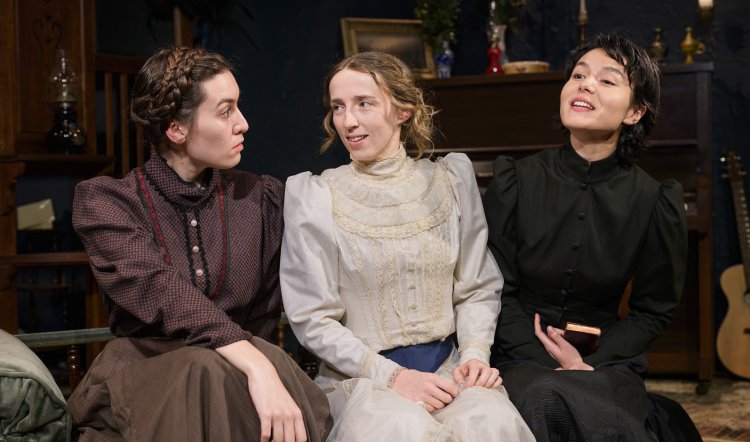
Irina’s name day and the first anniversary of their father’s death coincide, so feelings are mixed when it comes to cake, music, and celebration. It’s a sunny day, however, and they speak of hope. Andrei will become a professor, Irina longs to work, and Masha and Olga will return to Moscow. Masha is also taken with dashing officer Vershinin (Alfred Kouris) even though married to boisterous bore Kulygin (Faisal Hamza).
Suave Baron Tuzenbach (Toby Cary), also an officer, shares Irina’s weird determination to work, while elderly servant Amfisa (Cym) runs from morning to night, providing evidence, if anyone cares to notice, that work isn’t a bit romantic. Solyony (Lập Nguyễn), is another young officer and something of a pet dog – lolloping Labrador, perhaps – to Vershinin and Tuzenbach. Old family friend Chebutykin (Ren Watson) rounds out the table gathering.
Even though there is feasting, quantities of vodka, and wild merriment, the undercurrent of ennui and despondency is ever-present – almost visible. It’s an unnerving mix. Director Clara Voda is Romanian and possibly understands that clash of emotions better than most. It epitomises the Romania of Nicolae and Elena Ceauşescu, including the continuing yearning of 64% of the population for their reign!
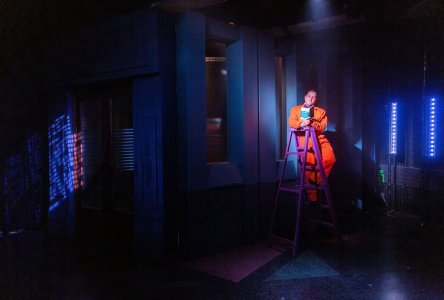
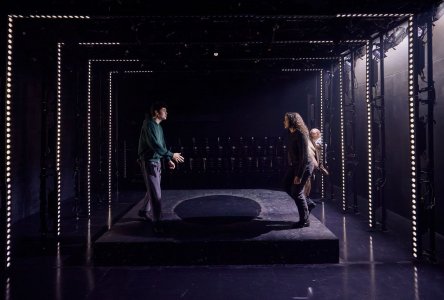
The sunshine disappears (almost literally, lighting design Sam Wylie) in the second half as a few lamps join candles to illuminate a household plunging into despair. Andrey’s gambling has lost the family house to a heavy mortgage; Natasha has married him, and they have a baby, Bobik, who is a pain in the ass, or perhaps it’s his manipulative mother who insists on no laughing, no music, no fun, and that Irina and Olga share a bedroom so the brat can have a sunny one.
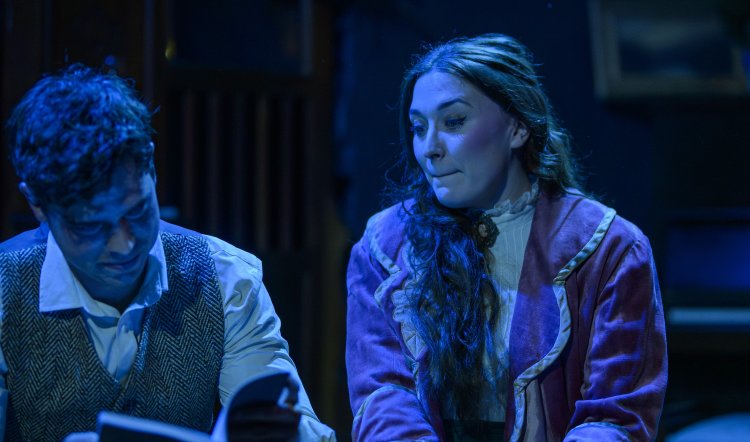
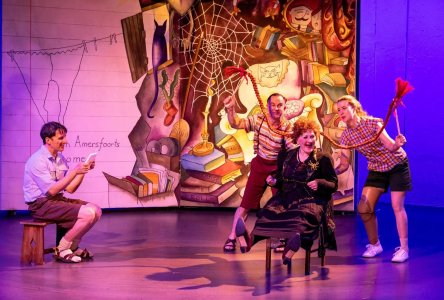
Last Waltz is a company of actors from the 2023 year at NIDA, where they fell in with Voda and determined to produce theatre simply and accessibly. This production, based on a translation by noted American academic Laurence Senelick, is presented in a freewheeling style that suits the company’s ambition, particularly the anachronistic youth of the men.
On opening night, the wheels were sometimes a little too free as a lack of pace bordered on indulgent, or simply not yet fully into sustained rhythm. Nevertheless, these Three Sisters and their un-adventures remain as fascinating today as they were 100+ years ago. Lost love, illicit love, dashed hopes, and thwarted ambitions are just as easily recognisable. Performances are, as yet, a little uneven. Nguyễn, Matoviċ, Alexander, and Cym make the best of it, with Emma Wright once again proving herself to be exceptional. If you love Chekhov, you will not be disappointed.